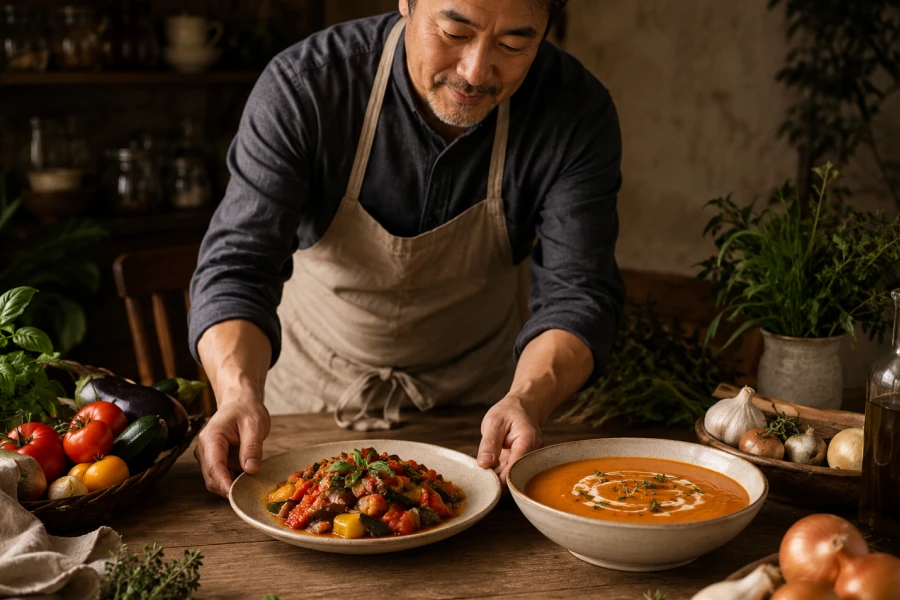
Ratatouille and soup pairing turns vegetables into something deeply satisfying. It works because both dishes honor produce in different ways. Soup can be silky, brothy, or rustic. Ratatouille brings color, herbs, and slow-cooked depth. Together, they create a meal that feels generous without heaviness. This is useful for home cooks who want elegance and comfort. The pairing also makes seasonal vegetables easier to enjoy. Each spoonful and forkful offers contrast. The table feels bright, warm, and complete. That is the beauty of simple French cooking.
The pairing succeeds because textures support each other. A smooth soup makes ratatouille feel hearty. A brothy soup keeps the plate light. A rustic soup echoes the vegetable character. Ratatouille adds color that many soups lack. Herbs connect both dishes naturally. Olive oil gives them a shared richness. The French vegetable cooking approach makes the combination feel balanced. You get variety without needing many separate dishes. The meal stays focused and satisfying.
Flavor logic matters when two dishes share the table. Tomato notes should not fight each other. Herbs should feel related, not repetitive. Garlic can bridge both dishes. Onion can add sweetness. Zucchini, eggplant, and peppers bring softness. A lighter soup can brighten the plate. A deeper soup can make the meal feel cozy. Balance comes from contrast and connection. When those two ideas meet, the pairing feels natural. That is what makes vegetables feel substantial.
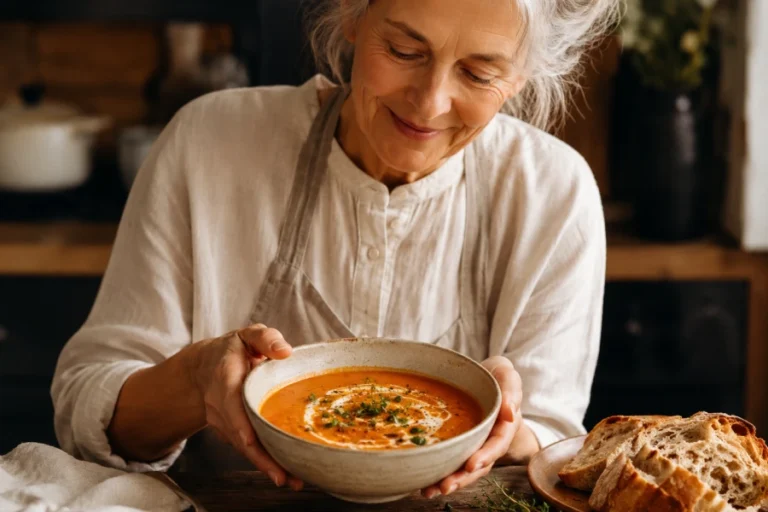
Soup style sets the direction. A chilled or bright tomato soup can make summer ratatouille feel fresh. A leek soup can create a gentle contrast. A bean soup can turn the meal heartier. A broth with herbs can keep everything light. Think about the occasion first. Lunch may need brightness. Dinner may need depth. The ratatouille meal ideas help make those choices easier. The right soup makes the vegetables taste more expressive.
This pairing is friendly to hosts. Both dishes can be prepared ahead. Flavors often improve after resting. The table can be set before guests arrive. Serving feels simple. A ladle and a warm platter are enough. Bread can complete the meal. Cheese can remain optional. The food accommodates different appetites without feeling plain. Ratatouille and soup pairing also looks beautiful because color does much of the work. That gives the host more confidence.
Finishes create harmony. Serve crusty bread for texture. Add basil or thyme at the end. Use olive oil sparingly for shine. Try lemon zest when the meal feels too mellow. Keep cheese light if the soup is creamy. Add pepper for warmth. Avoid toppings that make the table too busy. The French recipe pairings feel best when the final touches are quiet. Small accents should clarify the meal.
Seasonal cooking makes the pairing shine. Summer vegetables create a brighter plate. Fall herbs bring a deeper mood. Winter soups can make ratatouille feel warmer. Spring vegetables can lighten the whole idea. You can adapt the meal without losing its identity. That flexibility makes it useful across the year. It also encourages better shopping. Choose vegetables by quality, not habit. Ratatouille and soup pairing becomes a practical way to cook beautifully with what the season offers.



Leave a comment