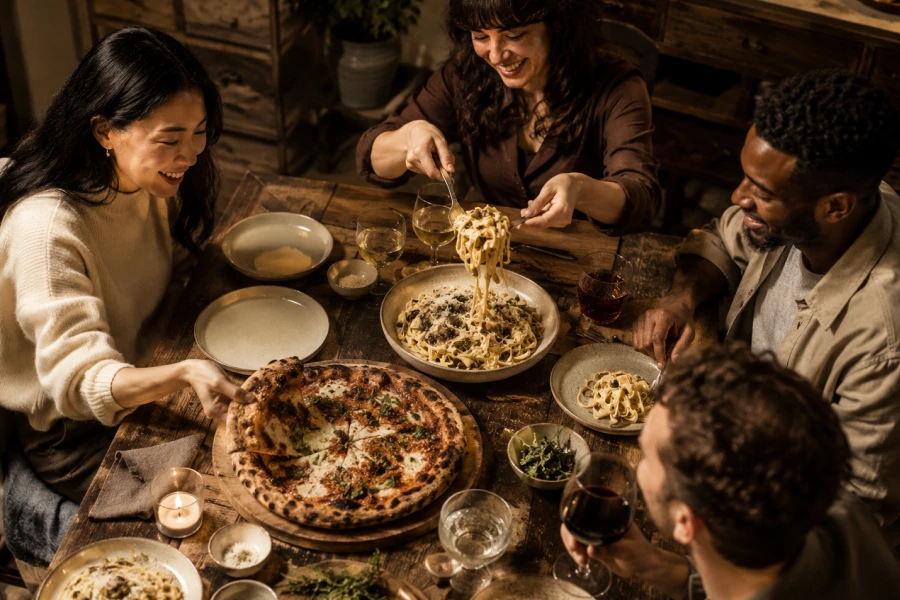
Pasta pizza night can feel casual, but it works best with structure. The food is relaxed, yet the timing benefits from planning. Dough needs time. Sauce needs balance. Pasta needs attention at the end. Guests need a table that feels easy. With a simple system, the meal becomes fun instead of frantic. You can serve variety without creating kitchen chaos. The best version feels generous, warm, and flexible. Everyone gets something familiar. The cook still feels in control.
Rhythm keeps the evening smooth. Start with anything that can rest. Dough should be prepared early. Sauce can sit quietly after cooking. Toppings can be sliced before guests arrive. Pasta should wait until the final stretch. Salad can be assembled at the end. This sequence protects texture and temperature. The easy Italian meals approach works because it reduces decisions. A clear rhythm lets the cook enjoy the night too.
Every household has preferences. Some people want extra cheese. Others want vegetables. Someone may prefer a lighter sauce. Children often like familiar toppings. Adults may enjoy stronger flavors. A flexible plan handles all of that. Make one classic option and one slightly adventurous option. Keep portions modest so guests can taste both. Avoid making too many variations. Choice feels fun until it becomes confusing. A focused menu always serves the table better.
Dough and sauce decide the meal before toppings appear. Dough should be flavorful, rested, and easy to stretch. Sauce should be bright enough to cut through cheese. Pasta sauce should coat rather than flood. These foundations make simple ingredients taste complete. A weak base cannot be rescued by extra toppings. A strong base needs very little. The classic pizza recipes mindset reminds home cooks to master the basics first. The result tastes cleaner and more confident.
Repeating the meal builds instinct. You learn how long dough needs in your kitchen. You discover which pasta shape works best with each sauce. You notice how much cheese is enough. You understand your oven temperature. These observations remove guesswork. The next meal becomes smoother. The table also develops its own personality. Guests begin to expect certain favorites. That familiarity creates comfort. Pasta pizza night becomes a ritual instead of a one-time project.
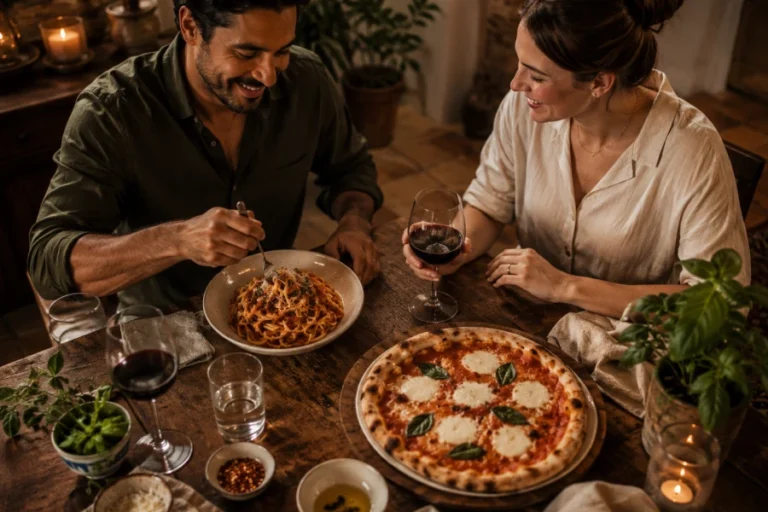
A good table has breathing room. Serve pasta in one generous bowl. Place pizza on boards or warm trays. Add salad for freshness. Offer grated cheese separately. Keep condiments simple. Use water, lemonade, or sparkling drinks for balance. Avoid crowding the table with too many sides. The Italian home cooking feeling comes from ease. People should reach, share, taste, and talk without fuss.
Small changes keep the meal fresh. Try a new herb. Change the cheese. Use seasonal vegetables. Add a different pasta shape. Serve a simple dessert. Play with crust thickness. Make one sauce ahead and one fresh. Let guests choose a topping combination. Keep the successful parts consistent. Pasta pizza night should feel dependable, not repetitive. With the right balance, it becomes the meal people request again.


Leave a comment