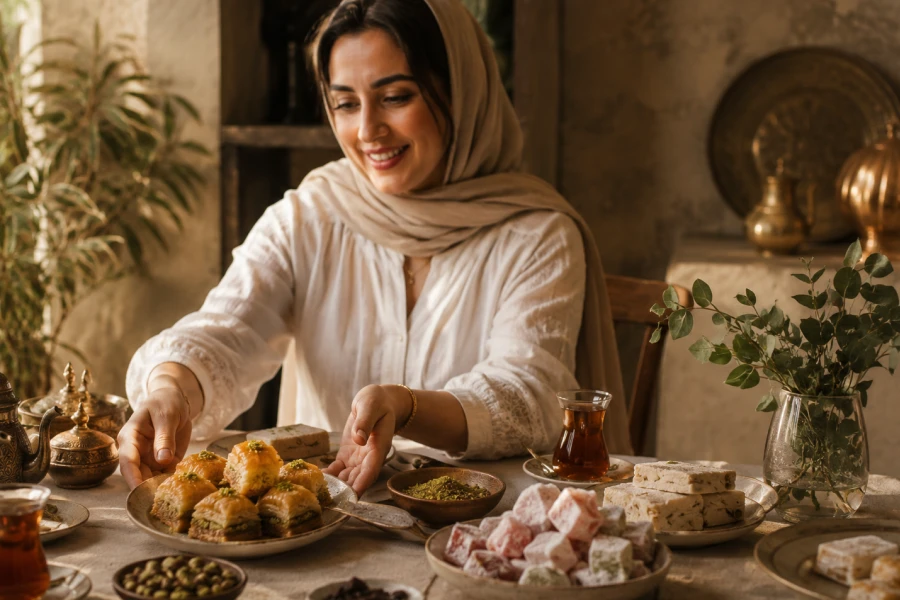
Turkish desserts turn sweetness into a shared experience. They are rich, fragrant, layered, and deeply connected to welcome. A tray of syrupy pastry can feel generous before anyone takes a bite. A small cube of delight can make coffee feel ceremonial. This is why food lovers keep returning to these flavors. They offer more than sugar. They tell stories about celebration, patience, and tradition. Home bakers also gain practical lessons from them. The textures are bold, but the methods stay approachable. The reward feels memorable every time.
The first lesson is abundance. Turkish sweets often arrive in small portions, yet they feel luxurious. Syrup, nuts, spice, fruit, and fragrance work together with purpose. Nothing feels accidental on a good dessert plate. That balance matters for home cooks. You can create richness without making everything heavy. A few thoughtful details change the whole table. The Turkish dessert traditions behind these recipes make sweetness feel warm and social. They invite guests to slow down. They also make simple serving moments feel special.
Great sweets often begin with simple pantry ingredients. Flour, butter, nuts, honey, sugar, and semolina appear again and again. Rosewater, pistachios, sesame, and citrus add character without confusion. That is helpful for home bakers. You do not need a professional kitchen to explore the flavor profile. You need organization, patience, and a clear sense of texture. Syrup should soak, not drown. Nuts should add contrast, not clutter. Dough should feel crisp, soft, or chewy by design. These habits improve every dessert you make afterward.
Texture carries much of the pleasure. Baklava offers crisp layers and sticky shine. Turkish delight gives a tender, chewy bite. Halva can feel crumbly, dense, nutty, and comforting. Rice pudding brings softness and calm. Each dessert teaches a different kind of control. Heat changes sugar quickly. Resting changes texture quietly. Cutting affects presentation more than many beginners expect. The baklava baking tips are especially useful because they sharpen your timing. Once you notice texture, your desserts become more intentional.
A strong dessert table does not need endless options. It needs contrast, rhythm, and serving confidence. One syrupy pastry can sit beside something chewy. A nut-based sweet can balance a creamy bowl. Coffee or tea can make the whole spread feel complete. This approach helps hosts avoid overthinking. You can choose fewer items and present them beautifully. Small plates, linen, fruit, and warm lighting add atmosphere. The table feels generous because every element has a reason. Guests remember that feeling long after dessert ends.
Ritual matters in Turkish-inspired serving. Let syrup settle before rushing to plate. Cut pastry cleanly so each piece holds shape. Serve delight in small cubes instead of large portions. Pair nutty sweets with unsweetened tea or strong coffee. Add citrus zest when a dessert needs lift. Use pistachio for color as well as flavor. Keep portions modest because these sweets are expressive. The Turkish delight recipes show how restraint can still feel indulgent. That is the charm of the tradition.
The best starting point is curiosity. Choose one dessert and learn its structure. Notice which ingredient creates aroma. Watch how heat changes syrup. Pay attention to cutting, cooling, and serving. These details remove intimidation from unfamiliar recipes. Turkish desserts become easier when you treat them as techniques, not mysteries. They also fit beautifully into modern home entertaining. You can serve them after dinner, with coffee, or as edible gifts. Once you build confidence, sweetness becomes a cultural adventure.


Leave a comment